
The Lierre pants
Black linen
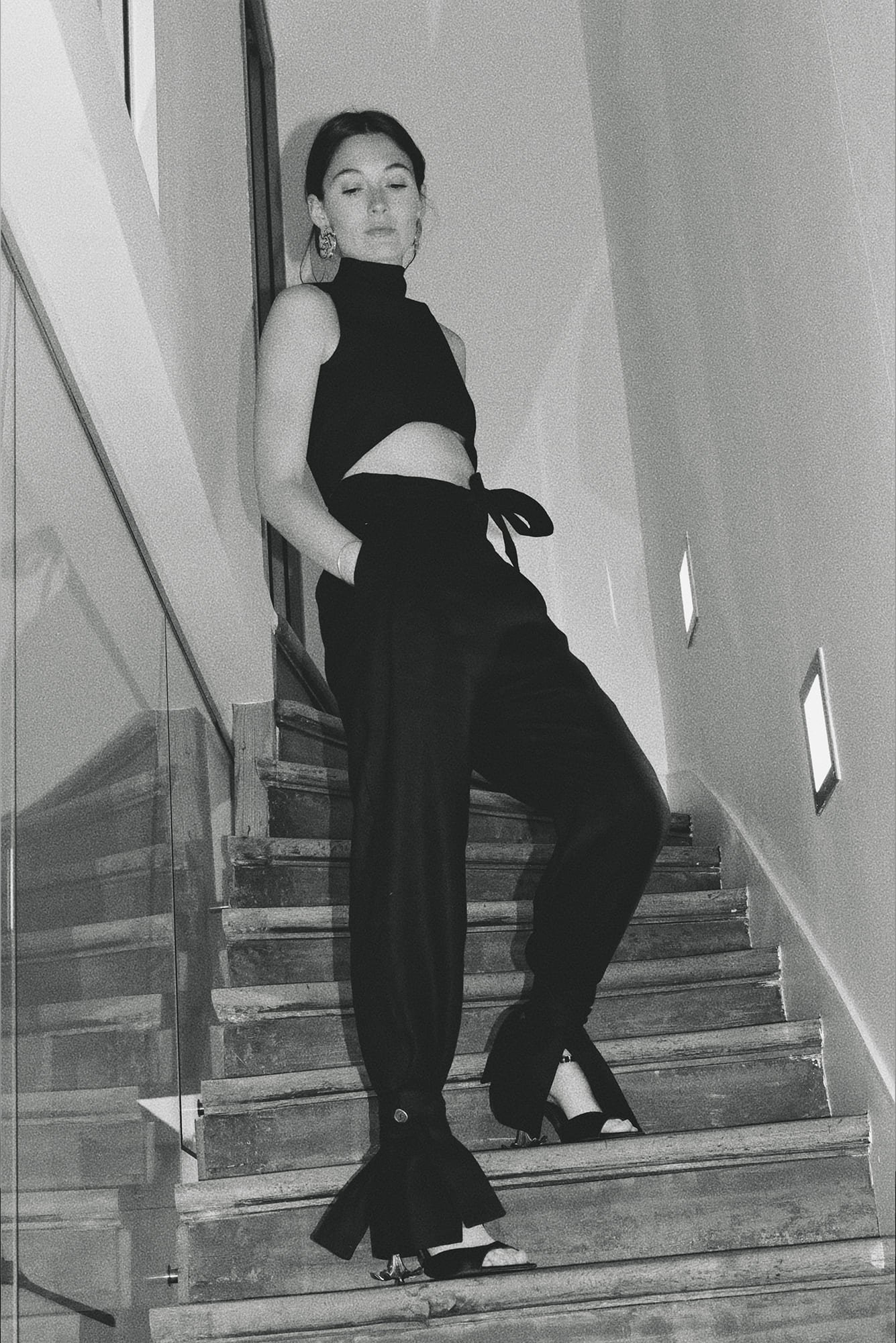
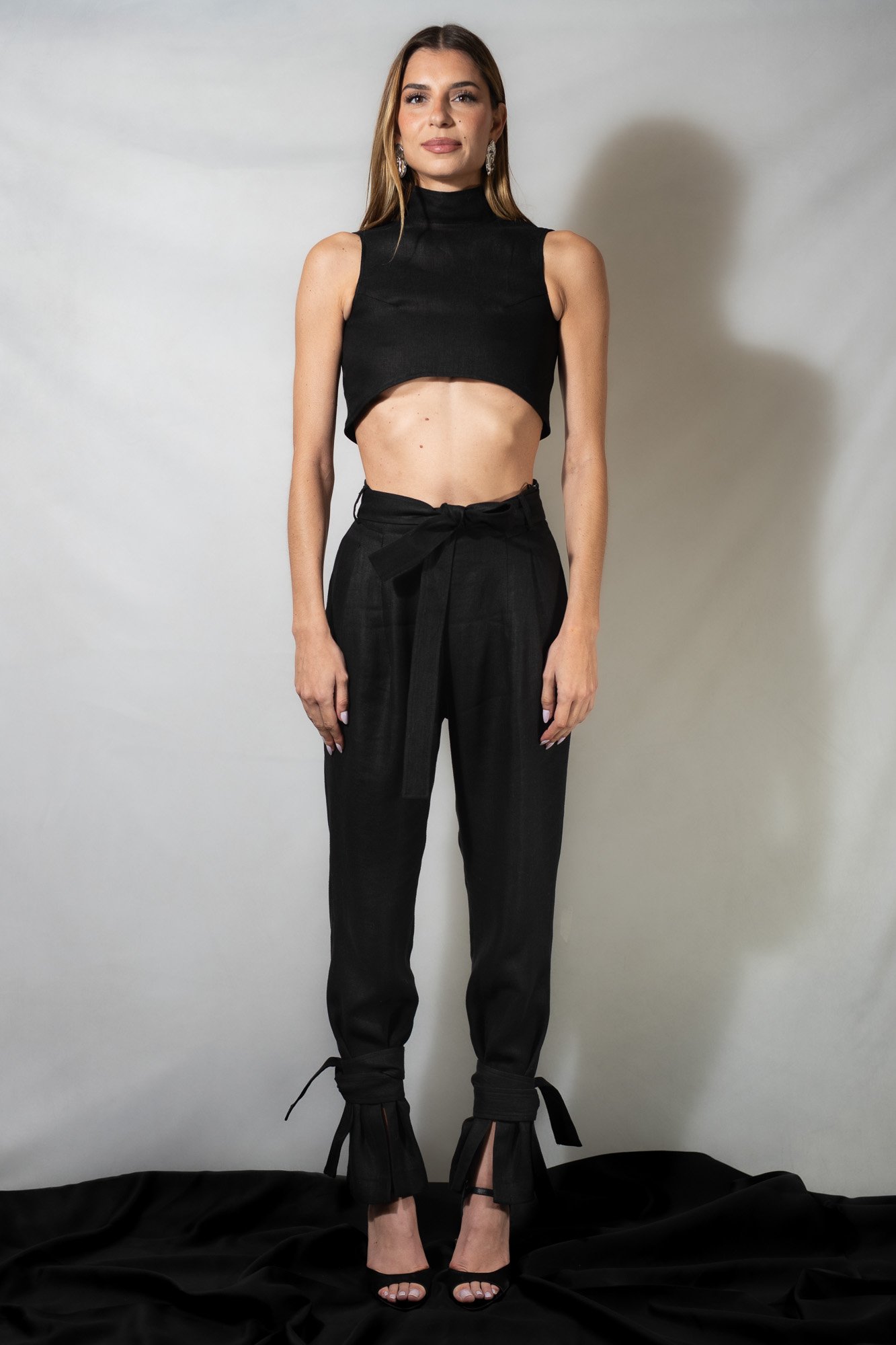
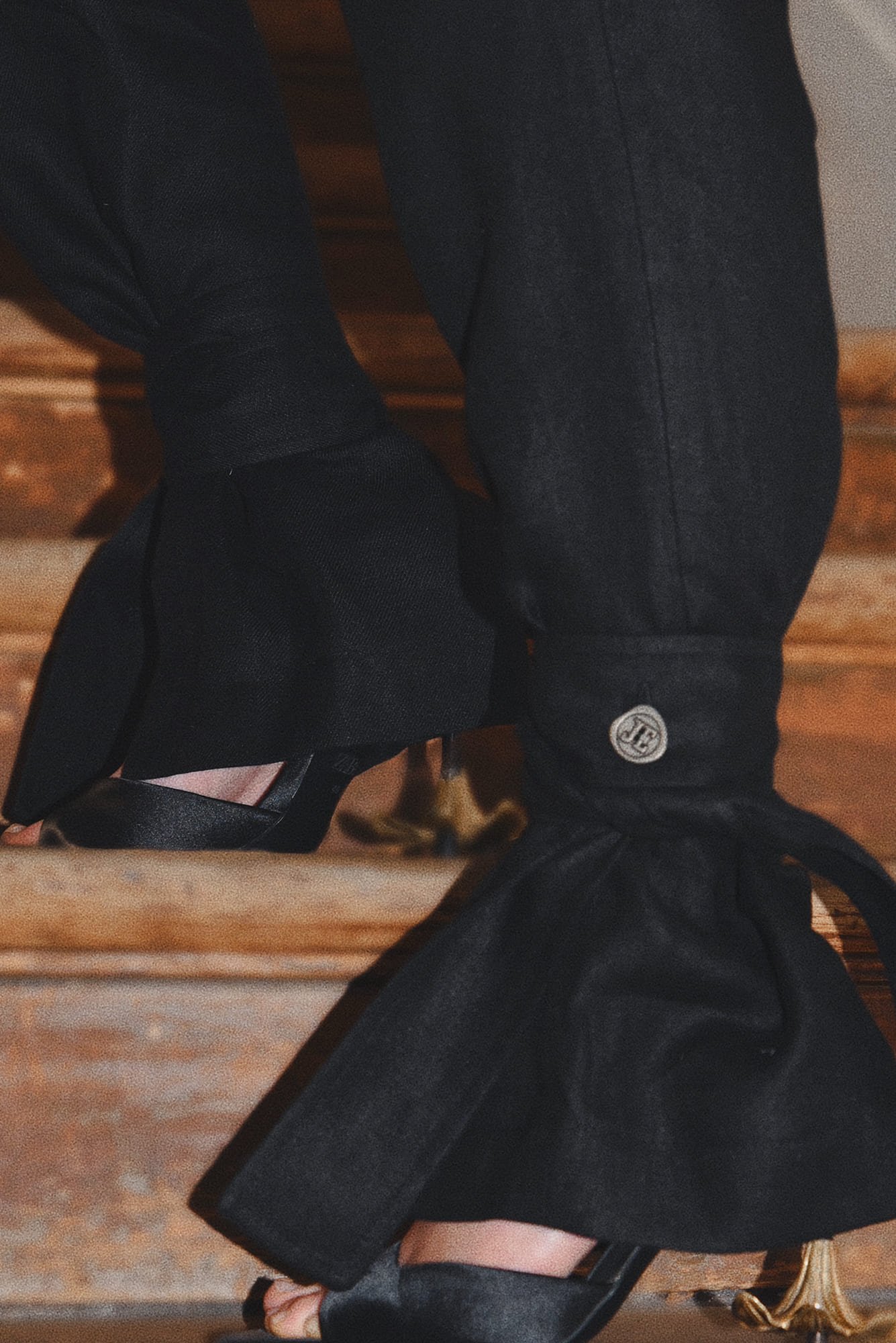
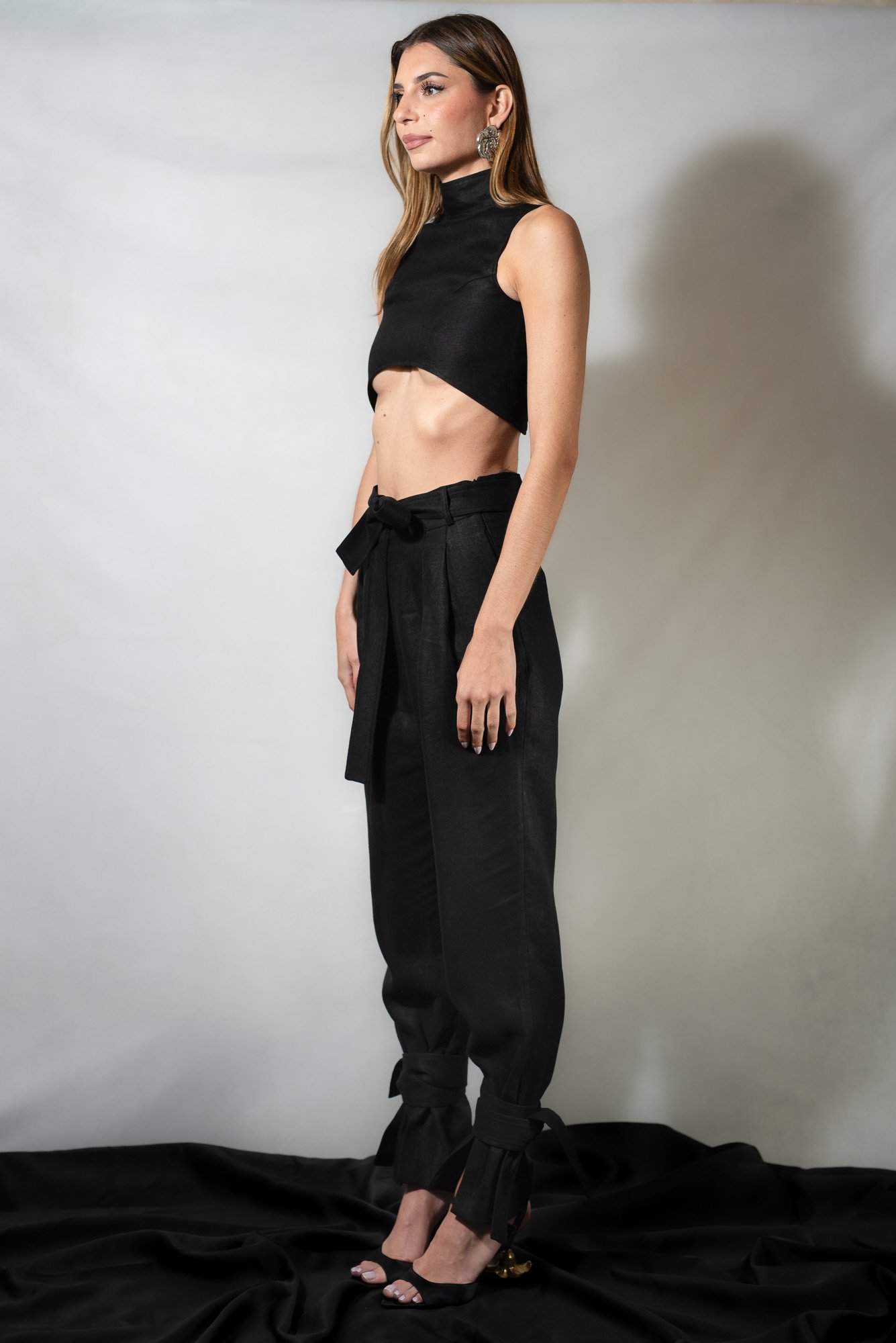
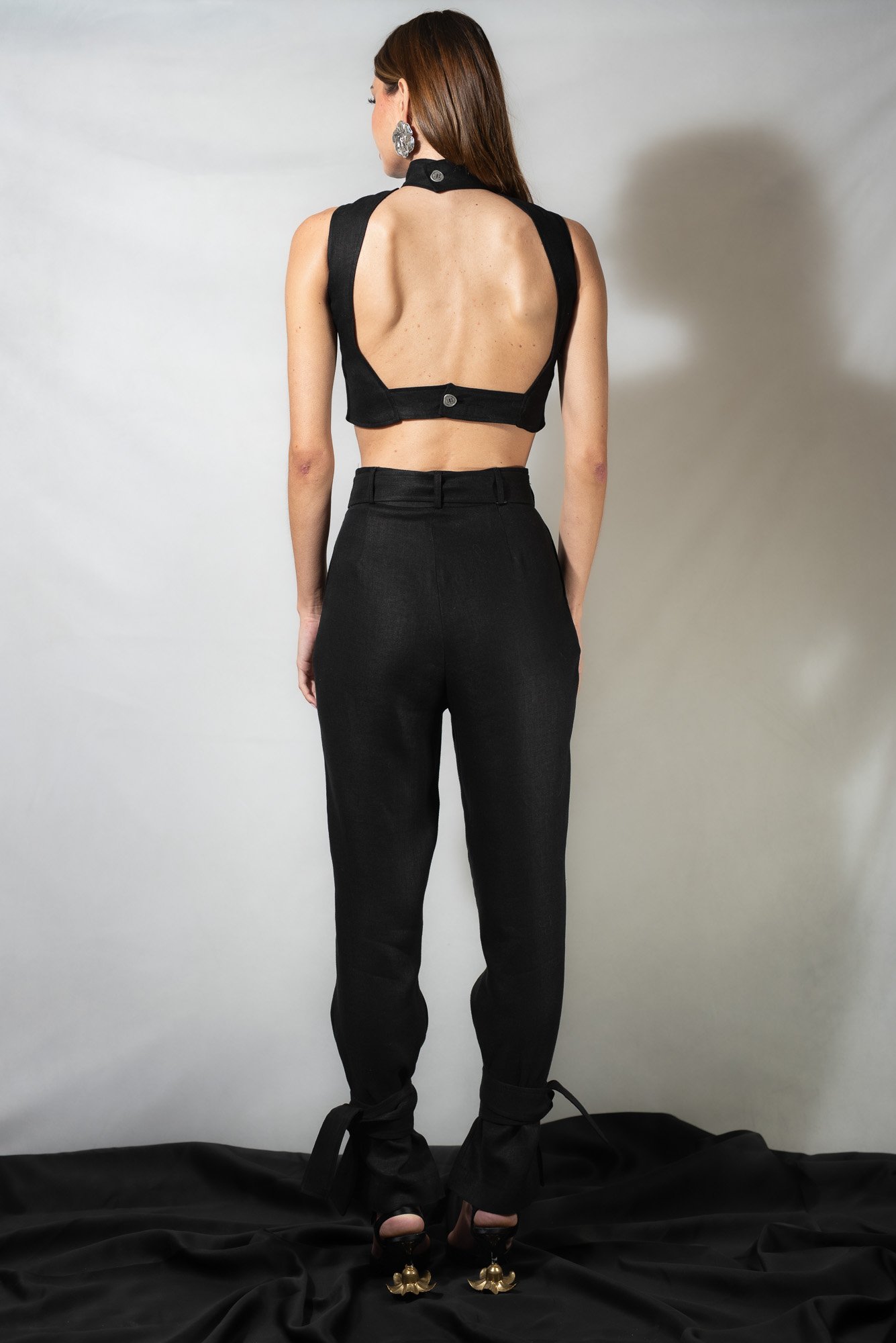
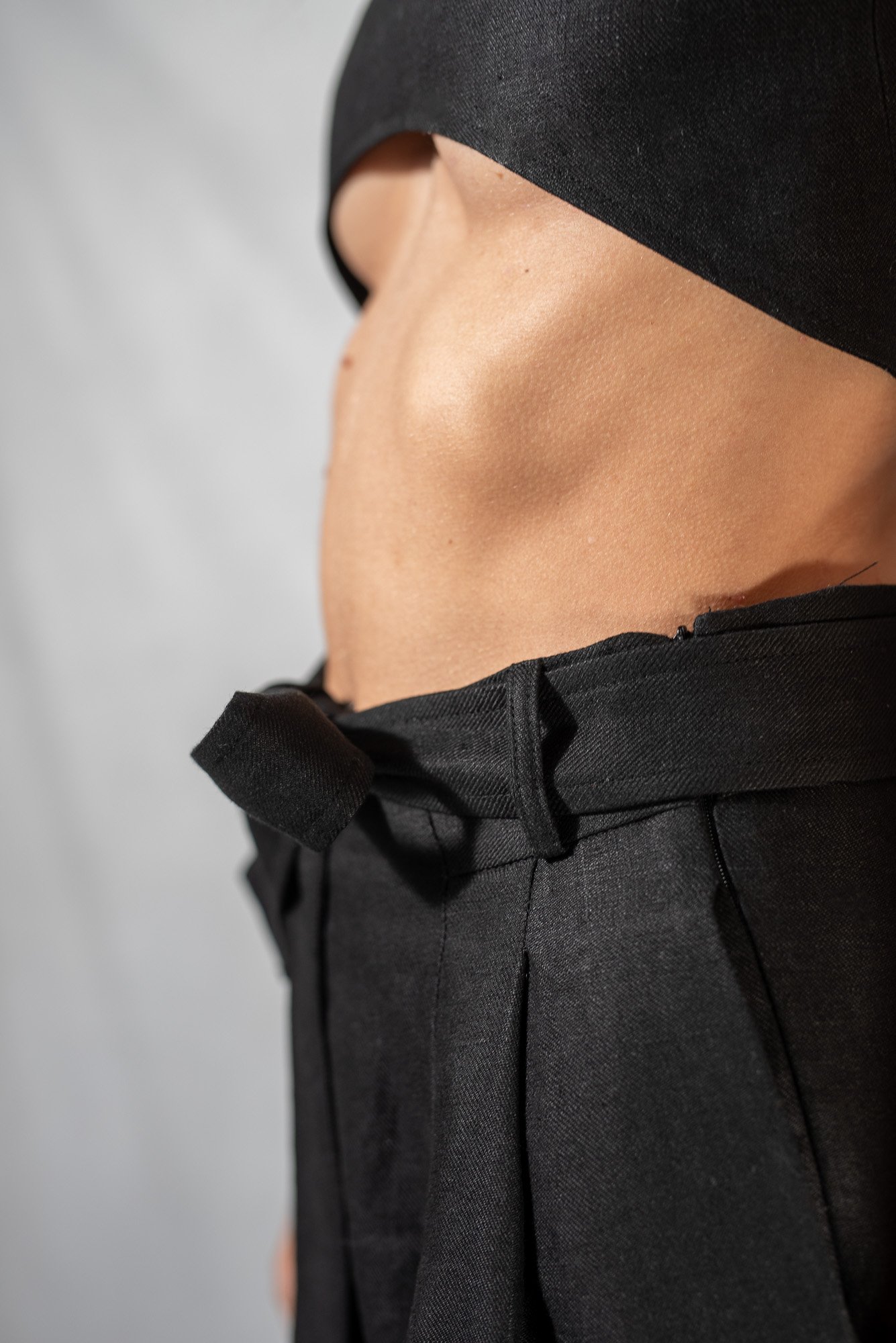
The Lierre pants in black linen are part of the Métamorphose collection (SS26).
“Lierre” is the French word for climbing ivy. In ancient Greece, ivy was the usual ornament of Dyonisos, the god of vegetation, and the god of the exuberance of life tending to emerge from all constraints and limits. Ivy symbolizes the force of nature and persistence.
Fabrics
This garment is made from deadstock fabric from an Italian luxury house:
-
- 100% linen
Traceability
Design: The Lierre pants have been designed in our studio located in the 10th arrondissement of Paris, France.
Composition: The Lierre pants in black linen are made from deadstock fabric from an Italian luxury house.
Production: The Lierre pants have been measured, cut, sewed and assembled in our atelier located in the 2nd arrondissement of Paris, France.
Care instructions
- Washing at low temperature (30°C/85°F)
- Do not bleach
- Do not tumble dry
- Iron at low temperature (110°C/230°F)
- Dry clean (P)
Couture version
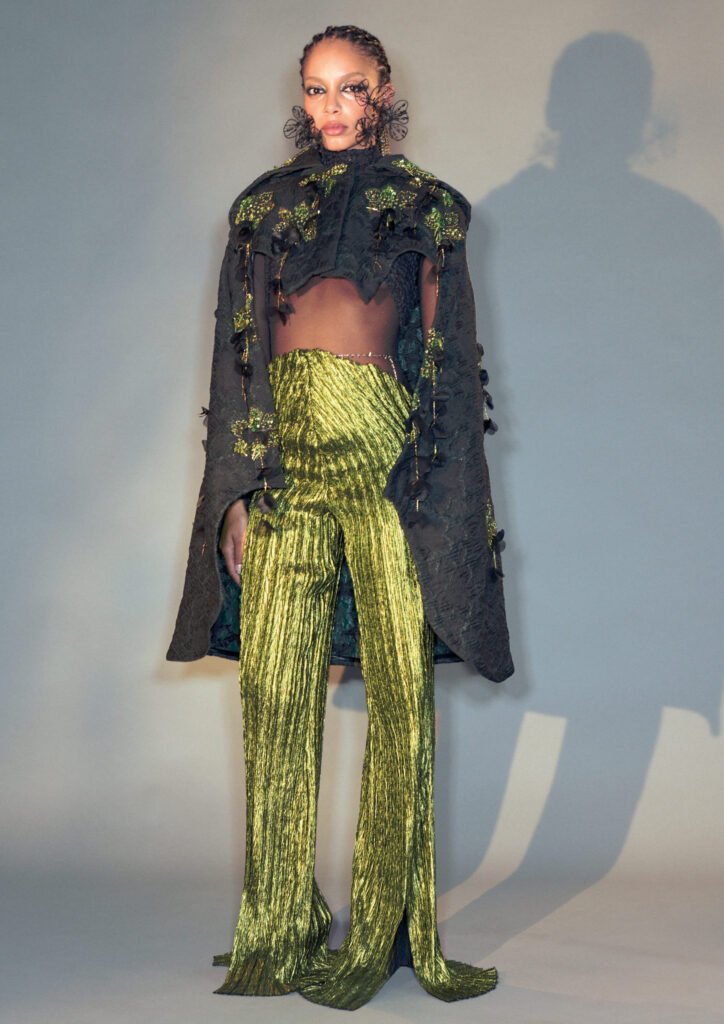
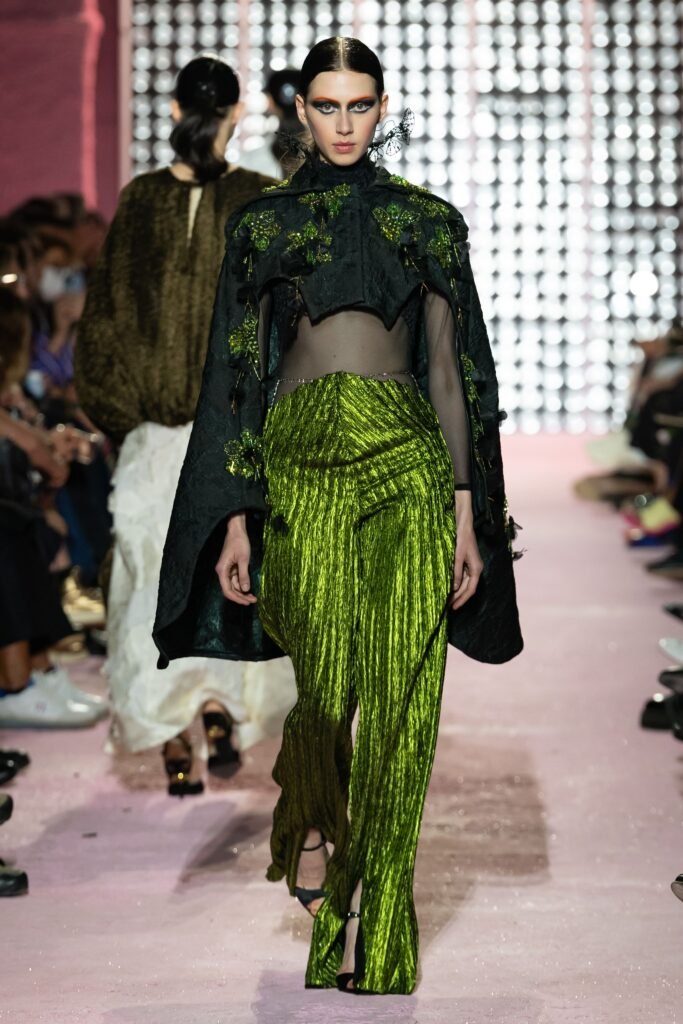
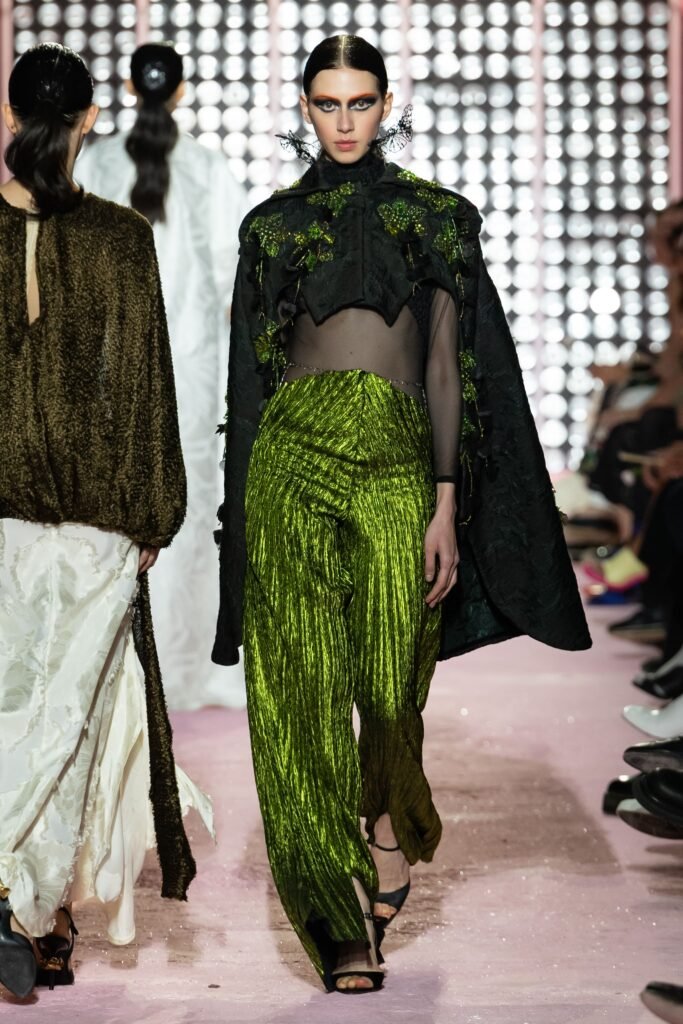
Métamorphose (FW25-SS26)
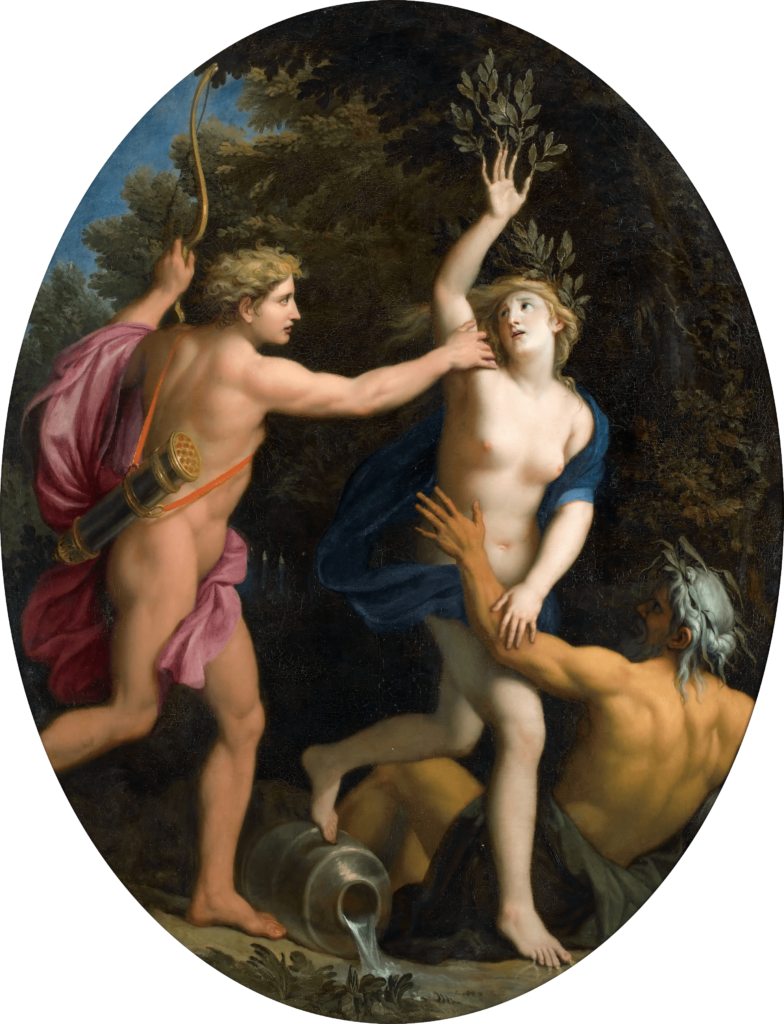
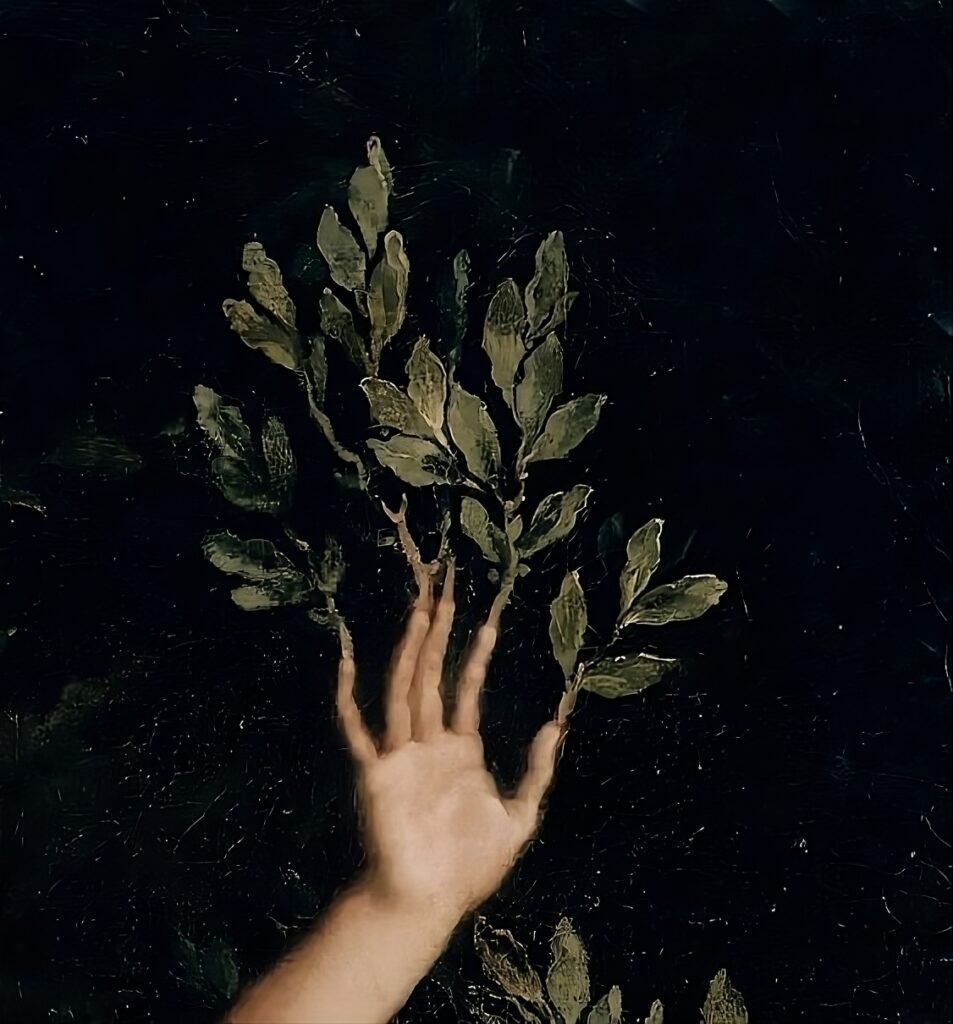
The Métamorphose collection is a tribute to the plant world, to the infinity of its forms, textures and colors. It’s an ode to nature, source of a multitude of materials and riches from which mankind has never ceased to draw inspiration.
The pieces of this collection are a manifesto dedicated to Nature: alive, poetic, joyful and colorful, but also capable of being mysterious and intriguing, whenever it attempts to free itself from the role assigned to it by man. Nature prints, sculpts or escapes from the outlines of the garments, as if driven by a fierce desire to reclaim its rights over the materials that surround it, from fabric to metal to paper. Freed from the role of mere adornment, nature bursts forth and imposes itself to the point of questioning: is it the origin or extension of the garment?
Based on the double meaning of the word “nature”, the Métamorphose collection is also a metaphor of the personal and career path of Julie Mouly–Pommerol, gradually gaining confidence and self-assertion.
Métamorphose bears witness to the intimate, sensual nature of the relationship between man and nature, as the latter inexorably attempts to reclaim its wild state, like a wake-up call to mankind.

